

Introduction
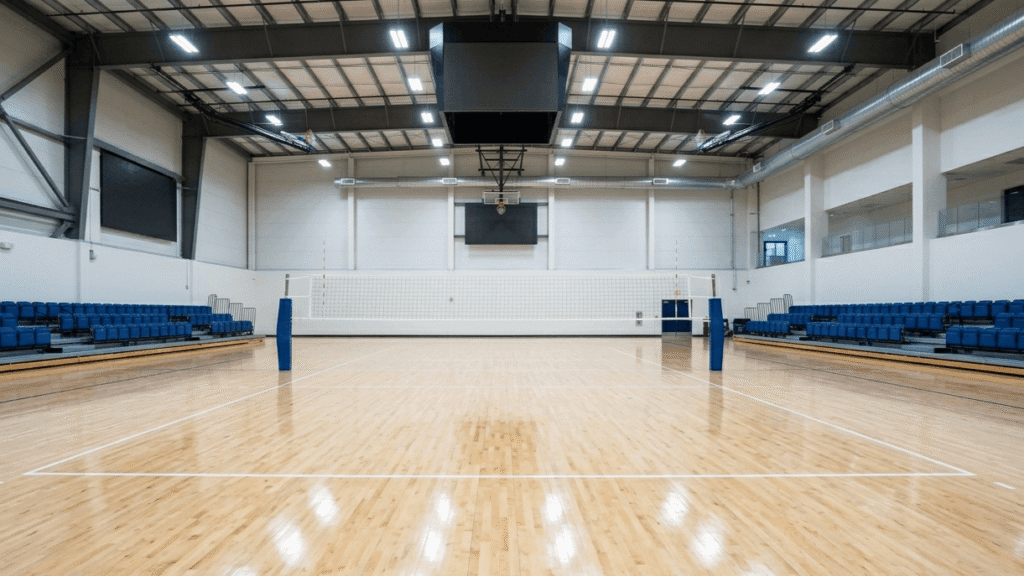
Have you ever stepped onto the indoor volleyball court, feeling the thrill of the game coursing through your veins, and wondered, “What goes into making this space so special?” Well, I certainly have. As a young professional volleyball player and a passionate writer on all things volleyball, I’ve embarked on a journey to uncover the intricacies of the indoor volleyball court dimensions that set the stage for our beloved sport. In this blog post, I’m excited to share with you a comprehensive guide that not only delves into the specifics of these dimensions but also brings to light why they matter in crafting unforgettable volleyball experiences.
High School Volleyball Court Dimensions
The Foundation of Our Passion
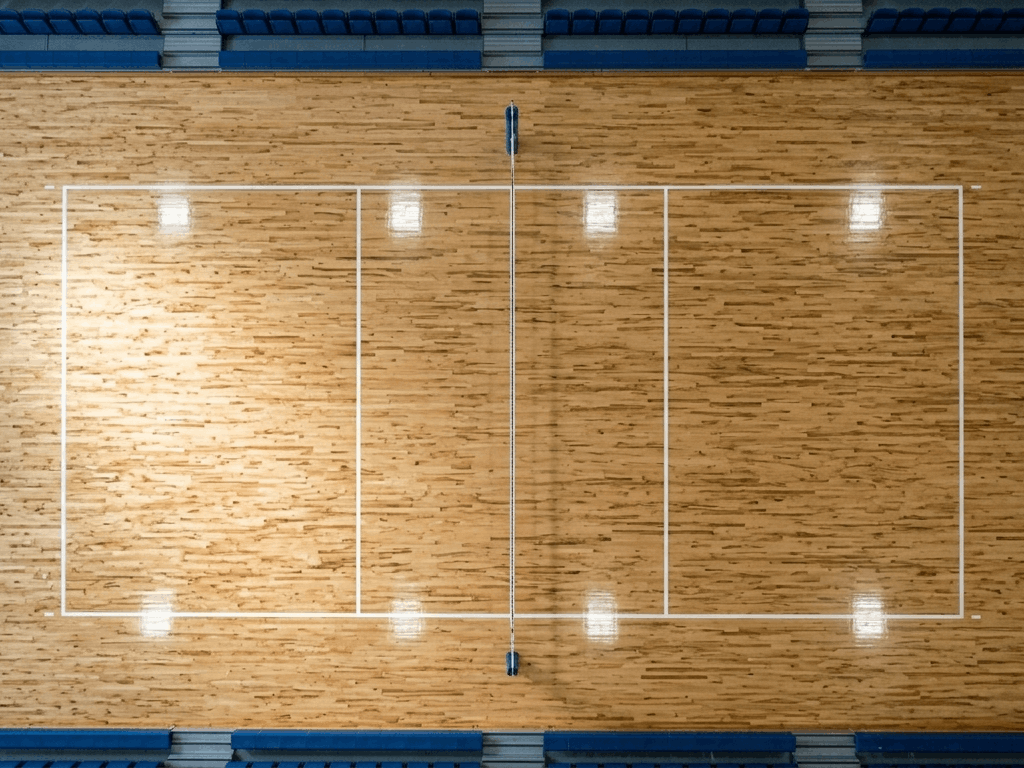
I remember vividly the first day I stepped onto the high school volleyball court. The expanse of the space felt almost overwhelming, a vast playground where I would soon learn the true meaning of teamwork, strategy, and perseverance. The standard dimensions of a high school court are 60 feet in length and 30 feet in width. It was within these boundaries that I first experienced the electrifying feeling of serving an ace, the satisfaction of a well-placed set, and the adrenaline rush of a powerful spike. This isn’t just a piece of my history; it’s a shared beginning for many of us who have come to love this game.
A Space to Learn and Grow
In high school, the volleyball court becomes more than just a surface to play on; it’s where we forge our first connections with the sport. The 60×30 feet space is ingeniously designed to introduce young athletes to the game’s dynamics, allowing enough room for movement, strategy implementation, and, most importantly, making mistakes and learning from them. Each square foot of the court has witnessed countless players discovering their strengths, working on their weaknesses, and growing both as athletes and individuals. It’s a testament to how a simple measurement can influence so many aspects of our development in the sport.
The Heart of High School Volleyball
What’s truly remarkable about the dimensions of a high school volleyball court is how it shapes the game. The length and width are not arbitrary numbers; they are carefully chosen to balance the need for a challenging play area while still being manageable for high school athletes. This balance is what makes high school volleyball so exciting and accessible. The court size allows players to master the basics of positioning, movement, and court awareness, which are crucial skills as they progress in their volleyball careers. It’s on this very ground that the seeds of future victories are sown, making every inch of the court significant.
Beyond the Measurements
But let’s not forget, the dimensions of the court are just the beginning. It’s the memories we create, the friendships we forge, and the lessons we learn that truly define our high school volleyball experience. Every dive, every block, and every cheer from our teammates adds layers to what initially seems like a simple space. As I reflect on my journey from a high school player to a professional athlete, I realize that those 60 feet in length and 30 feet in width were more than just measurements—they were where my dreams took shape, and where I learned to chase them relentlessly.
In sharing these thoughts with you, I hope to evoke a sense of nostalgia and appreciation for the high school volleyball court. It’s more than just a part of the game; it’s where many of us took our first steps towards becoming the players we are today. So, the next time you find yourself on or near a high school court, take a moment to remember and cherish those beginnings.
NCAA, FIVB, and USA Volleyball Court Dimensions
Transitioning from high school to more competitive leagues like the NCAA, FIVB, and USA Volleyball was a pivotal moment in my volleyball career. Stepping onto these courts, you’ll notice a subtle yet significant adjustment in dimensions – the court narrows to 59 feet in length and 29.5 feet in width. This might seem like a minor change, but believe me, it’s one that challenges you to refine your skills and adapt. The beauty of this adjustment lies in its ability to standardize play across the globe, ensuring that every game is a fair test of talent, strategy, and teamwork.
- Uniformity Across Competitions: The slight reduction in size demands precision and agility, making the game even more thrilling. It’s a testament to the sport’s evolution, where every inch and foot contributes to the competitive spirit.
- Enhancing Player Performance: This environment pushes players like me to hone our techniques, adapt our strategies, and elevate our game. The confined space magnifies the importance of accuracy and communication, aspects of the game that are crucial for victory.
- Global Standardization: These dimensions create a universal playground that transcends borders, allowing players from different backgrounds to compete on an equal footing. It’s a reminder that volleyball, at its core, is about bringing people together, challenging us to be our best selves both on and off the court.
In these courts, every serve, spike, and save becomes a lesson in precision, a dance that tests your limits and expands your capabilities. The shift from high school dimensions to those of the NCAA, FIVB, and USA Volleyball doesn’t just alter the physical boundaries; it transforms the game, making every match a journey towards excellence. As I continue to play, I carry with me the lessons learned in these spaces, grateful for the challenges they present and the growth they provoke.
Court Division and Attack Lines
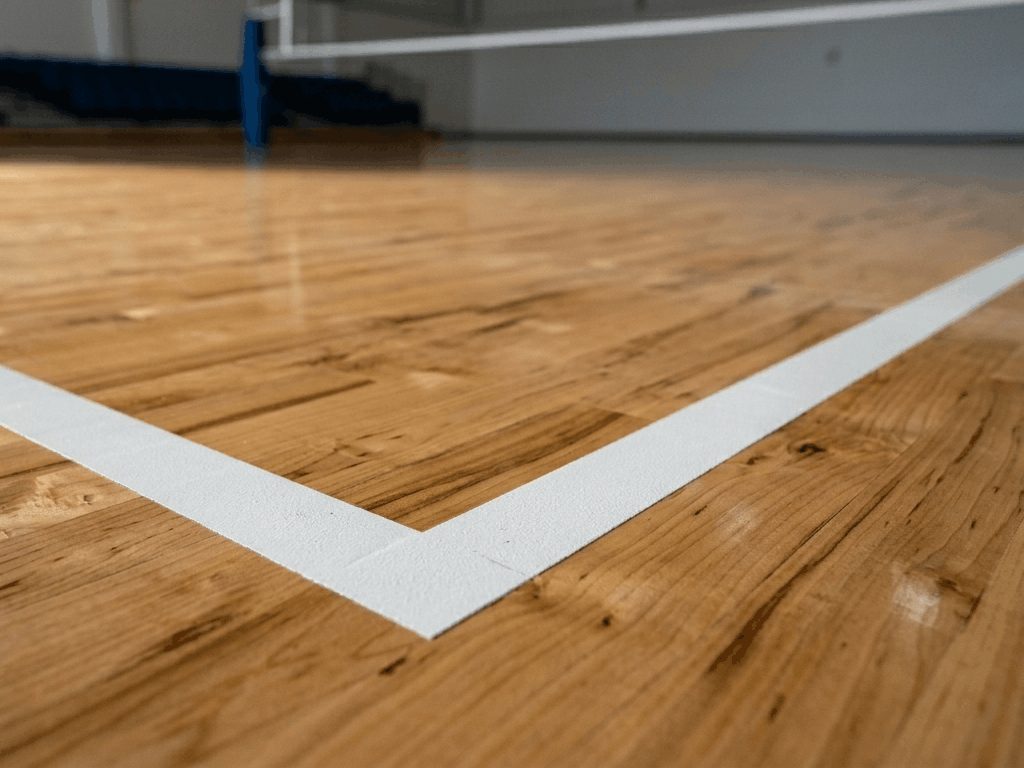
Stepping onto the court, dividing it down the middle with that center line, always sends a shiver of anticipation through me. It’s like drawing a line in the sand, saying, “This is where we battle.” But it’s not just a physical division; it’s a psychological one, reminding us of the teamwork and strategy required to conquer the space. Each side of the court becomes a domain, where six players move as one, anticipating, reacting, and executing plays with precision. That center line is more than just paint on the floor; it’s the heartbeat of the game, pulsating with every serve, set, and spike.
- The Battlefield: The court is our arena, and the center line is the invisible barrier that sets the stage for every rally. It’s here, in this well-defined space, that we learn the essence of volleyball – the balance between offense and defense, the thrill of crossing into enemy territory, and the sweet victory of a well-placed shot that no one can reach.
- The Attack Line’s Challenge: Positioned 9 feet 10 inches from the center line, the attack line is a thrilling boundary for front-row players. To me, this line represents a challenge – a call to leap higher, hit harder, and always aim to outsmart the block. It’s a constant reminder that greatness comes from pushing limits, and every approach, every leap, is an opportunity to make a statement.
- The Art of the Backcourt Attack: For those of us who play in the back row, the attack line also delineates where we can jump from to launch a surprise attack. It adds a layer of strategy and skill, encouraging us to master the art of timing and placement. This aspect of the game has taught me patience and precision, as hitting from behind the line requires a keen understanding of both the opponent’s defense and the dynamics of the ball.
- Unity Across the Lines: But perhaps the most profound lesson the court division and attack lines have taught me is the importance of unity. No player can cover the entire court alone; it takes a team moving in harmony, understanding each other’s strengths and covering weaknesses. These lines on the court have shown me that while individual brilliance can shine, the true beauty of volleyball lies in the collective effort, the shared victories, and the mutual respect among teammates.
Every time I step onto the court, I’m reminded of these lessons. The division line and attack line are not just part of the game’s rules; they’re symbols of what it takes to excel in volleyball and in life. It’s about boundaries and the courage to push beyond them, about individual effort and the power of teamwork. So, the next time you find yourself preparing to serve or gearing up for a spike, take a moment to appreciate these lines – they’re more than just markers; they’re the foundation of the incredible journey that is volleyball.
Recommended Free Zone Area
Around the court lies the free zone, a safety buffer that extends the game beyond the boundary lines. With 10 feet outside the sidelines and 15 feet beyond the end lines, this area is crucial for those heart-stopping saves and dives. It’s this additional space that teaches us the importance of perseverance, pushing us to chase after every ball, no matter how far it goes.
As I bring this journey through the dimensions of the indoor volleyball court to a close, I hope you’ve felt a deeper connection to the very grounds that host our exhilarating bouts. From the spirited beginnings on a high school court, stretching 60 feet long and 30 feet wide, to the slightly more intimate dimensions of the NCAA, FIVB, and USA Volleyball courts, each measurement sets the stage for our passion and play.
The court, with its division and attack lines, is more than just a rectangle—it’s a canvas where our limits are tested, and our greatest victories are forged. The attack line, a mere 9 feet 10 inches from the center, isn’t just a boundary; it’s a launchpad for our most ambitious leaps.
And let’s not forget about the recommended free zone area. This buffer isn’t merely about safety; it’s a testament to our perseverance, encouraging us to push beyond the boundaries, literally and metaphorically.
Through this post, my aim was not just to inform you about the nuances of an indoor volleyball court but to spark an appreciation for the craft behind it. These dimensions do more than define the physical space—they shape our experiences, our strategies, and our stories.
So, the next time you step onto that familiar court, whether it be with the nervous excitement of a newcomer or the seasoned confidence of a veteran, take a moment. Feel its expanse, its boundaries, and everything it represents. Remember, it’s not just a space—it’s where legends are born, where every square inch has the potential to witness the extraordinary.
In sharing these insights, my hope is to have kindled in you a burning passion for the game, a deeper respect for the court that holds our dreams, and a renewed zeal to push the limits of what you thought possible. Here’s to the game that unites us, challenges us, and allows us to soar—here’s to volleyball, a sport like no other.